Tacoma Limewash Painting · Services

Limewash Stucco and Concrete in Tacoma, WA

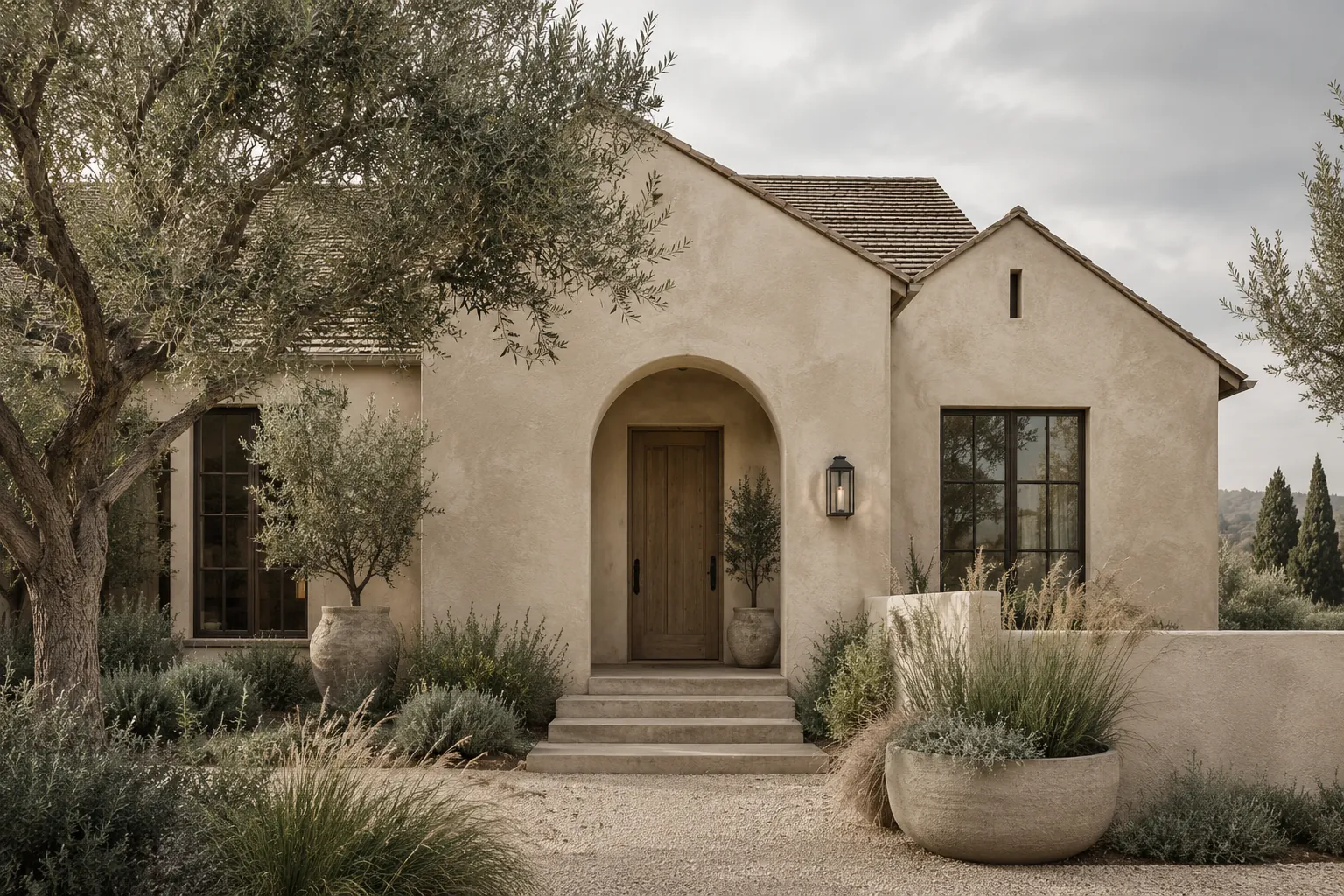
Tacoma Limewash Painting applies limewash to cement-based surfaces in Tacoma, Washington, including stucco walls, concrete block and poured concrete, from house fronts and garden structures down to basements. These surfaces are alkaline and porous, so once clean and sound they let lime soak in and harden into a soft, cloudy coat that resembles old plaster more than paint.

Texture and absorbency vary from one wall to the next, so the surface has to be checked and sampled before work is planned. Stucco and concrete limewashing is available in Tacoma and in University Place, Fircrest, Ruston, Fife, Lakewood, Gig Harbor and Puyallup.

Request a stucco quote

Stucco cottage finished in warm sand-colored limewash

Stucco and concrete limewash options

Cement stucco exteriors

Bare cement stucco, or stucco limewashed before, absorbs lime well and gains gentle tonal variation on smooth and sand finishes. Acrylic paint closes the surface: if it is sound, it needs a bonding primer that the limewash maker has approved, whereas an elastomeric coating normally has to be removed. Hairline cracks need repair so water cannot get behind the finish.
New stucco

Fresh stucco is still curing and highly alkaline, and limewash applied too soon can dry blotchy. As one example, Romabio’s 2017 Classico data sheet asks for roughly 21 to 28 days of cure on new Portland cement stucco, while other systems set their own requirements. When the stucco is ready depends on the product chosen and the stucco’s condition.

Concrete block and cinder block

Block faces and mortar joints soak up lime at different rates. Working the first coat well into the texture, then laying a finish coat over it, evens out the difference. Garages, garden walls and foundations built of block look far less utilitarian afterward.

Poured concrete walls

Concrete can be limewashed inside or out for a softer, stone-like tone, but only where the lime can get in. Form-release oils, curing compounds and sealers all reduce absorption, so the surface is cleaned and tested for absorption before any sample is brushed.

Basement and garage walls

Since lime lets water vapor through instead of trapping it behind a film, it is a traditional way to brighten masonry basement walls. It does nothing against active leaks or hydrostatic pressure, though, so a wet basement needs its water source dealt with before any finish.

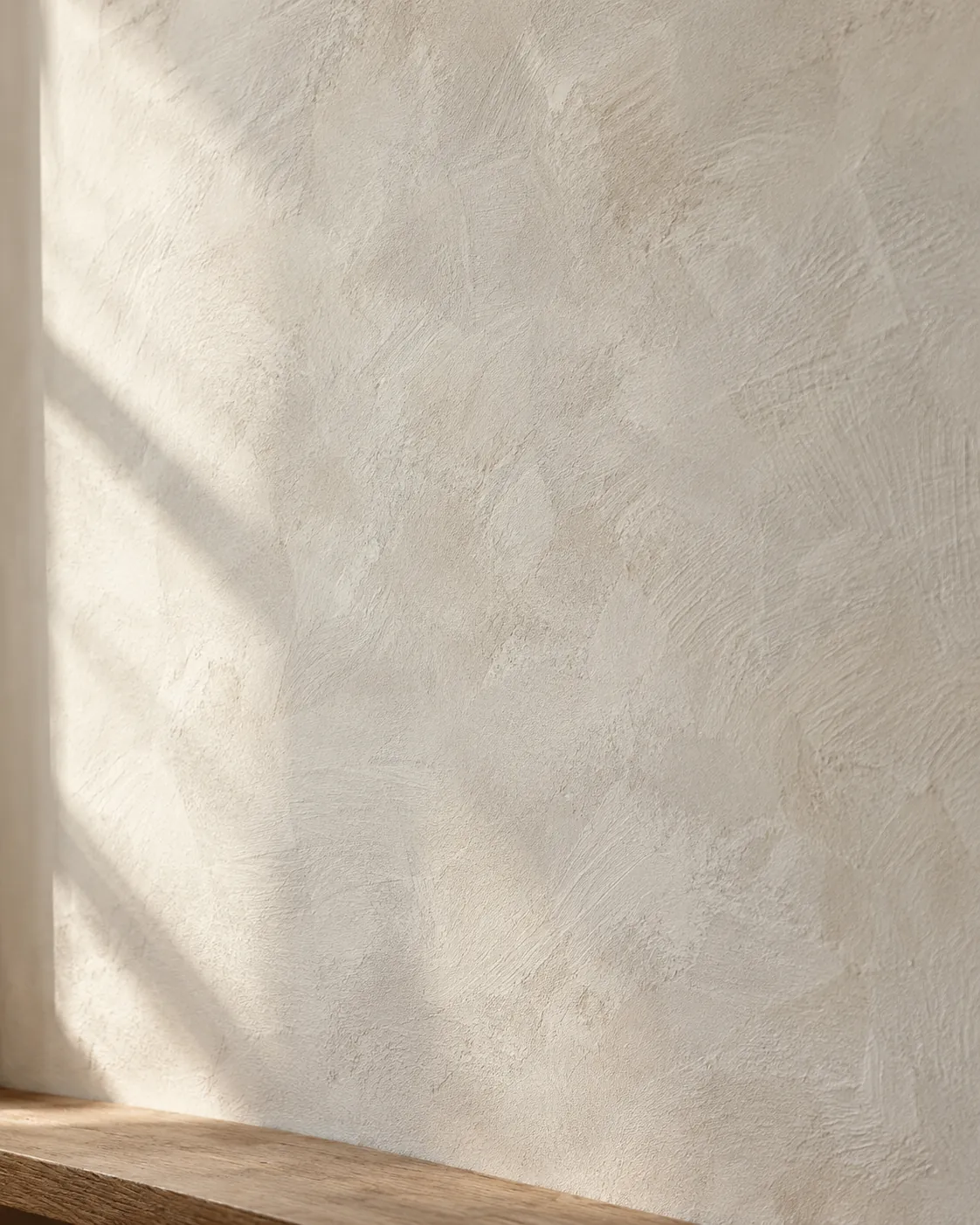
Close view of soft clouded limewash texture in raking light

Is your stucco or concrete ready?

Anything that stops water soaking in also stops lime. A readiness check therefore looks at cracking, patches that sound hollow, salt bloom, any earlier coating and any water repellent. Acrylic paint and elastomeric coatings both block absorption but are treated differently. Sound acrylic may accept a bonding primer if the limewash maker makes one for that system. Elastomeric coatings, excluded by at least one major maker, generally need removing first.

Lime on stucco carbonates exactly as it does on brick, so the coat needs mild weather, no rain and no harsh sun until it has firmed up.

Looks that suit stucco

Stucco’s texture throws small shadows into the lime, so pale tones such as warm sand, chalk and light clay show off that texture. Darker earth colors work on garden walls and outbuildings. A sample board with a similar texture shows how much movement to expect.

Request a stucco or concrete limewash quote

Tell us the surface type, any paint or sealer on it, and the address.

Phone coming soon